Baseball Boy: A Designer’s Review for Real Projects
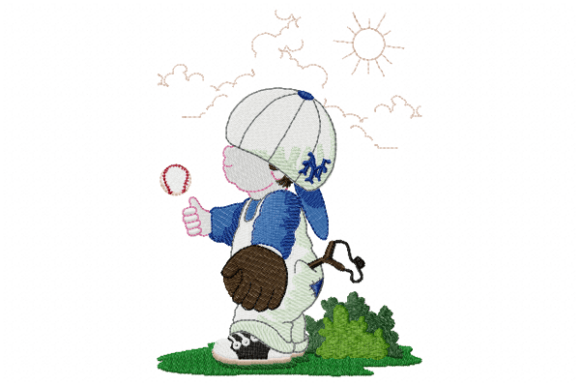
When I first pulled up the Baseball Boy embroidery design on my screen, I wasn’t looking for flashy marketing claims. I was looking for stitch logic. As a designer who has spent countless hours troubleshooting puckered fabric and broken needles, my first impression of any new digital asset is always cautious. Does this design respect the physics of thread? Will it hold up after a wash cycle? For Baseball Boy, the initial visual scan suggests a thoughtful balance between playful charm and technical feasibility, making it a strong candidate for both personal keepsakes and commercial inventory.
Visual Personality and First Impressions
The mood of Baseball Boy is undeniably cheerful and sporty without being overly aggressive or cluttered. The layout feels centered and balanced, which is crucial when you are working with limited hoop space. The character’s expression and posture convey energy, fitting perfectly into the Boys category while remaining soft enough for baby items. From a design perspective, the lines appear clean, suggesting that the underlying digitizing likely prioritizes clarity over excessive density. This is a vital trait for any machine embroidery design intended for small-scale applications like caps or baby clothes, where too many stitches can turn a cute motif into a stiff, cardboard-like patch.
I immediately imagined this design on a heather grey sweatshirt. The contrast potential is high, and the thematic element is universal enough to appeal to a broad audience. It doesn’t scream "trend" in a way that will date quickly; instead, it feels like a classic sports motif that parents and grandparents love to gift. This timeless quality is what separates a fleeting craft project from a viable small shop product.
Real-World Application Scenarios
To truly evaluate an embroidery file, you have to move beyond the screen and think about the finished product. I recently considered using Baseball Boy for a custom order involving a set of personalized tote bags for a little league team. The design’s footprint seemed ideal for the side panel of a canvas tote, where visibility is key but structural integrity must be maintained. Because the design likely utilizes a mix of satin stitch for outlines and fill stitch for larger areas, it should lay flat on medium-weight canvas if paired with the right stabilizer.
Beyond totes, this design shines in custom apparel. Imagine it stitched onto the left chest of a polo shirt or the back of a denim jacket. The scale appears versatile enough to work as a standalone focal point or as part of a larger themed collection. For Etsy sellers and craft business owners, versatility is currency. A design that works on a tote bag design prototype can often be resized slightly for a sweatshirt embroidery project, doubling your return on investment for the digital purchase.
Another strong use case is baby embroidery. Parents love sports themes for nursery decor or milestone outfits. If the details are not too fine, Baseball Boy could look adorable on a onesie or a burp cloth. However, this requires careful attention to thread colors. Using pastel threads on white fabric might lack definition, so I would recommend testing high-contrast combinations to ensure the facial features and baseball elements remain distinct.
Technical Considerations and Fabric Compatibility
While Baseball Boy shows promise, no design is universally perfect for every substrate. Here is where practical experience matters. If you are planning to stitch this on stretchy fabric like jersey knit, you must use a cut-away stabilizer to prevent distortion. The weight of the stitches, particularly if there is significant fill work, can pull lightweight fabrics out of shape. Always test on scrap fabric first. This is non-negotiable for professional results.
For textured fabrics like terry cloth towels or fleece blankets, the design needs to sit on top of the pile. A water-soluble topping is essential here to keep the stitches from sinking into the fabric texture. Without it, the crisp lines of the baseball theme might get lost, reducing the overall professionalism of the finished product.
Curved surfaces present another challenge. If you are applying this to a cap, ensure your machine has a cap driver and that you are using a stiff backing stabilizer. The curvature of a hat can distort designs that are too wide or have uneven weight distribution. Based on the visual balance of Baseball Boy, it seems compact enough for standard cap hoops, but always check the specific dimensions provided in the file package before committing to a expensive headwear item.
Enhancing Product Value and Brand Consistency
From a business standpoint, the quality of your design assets directly impacts customer trust. A clean, well-digitized design like Baseball Boy contributes to a polished brand image. When customers receive a personalized gift that looks professionally made, they are more likely to leave positive reviews and return for future purchases. The clarity of the stitching affects perceived value. If the edges are jagged or the colors bleed into each other due to poor underlay stitching, the item looks homemade in the wrong way.
Using this design in your printable mockup previews can also boost engagement. High-quality images of the design on various products help buyers visualize the end result. Whether you are selling the digital embroidery file itself or the handmade product, showing the design in context—on a backpack, a pillow cover, or a holiday ornament—helps bridge the gap between digital expectation and physical reality.
Practical Notes for the Embroiderer
- Check File Formats: The description mentions multiple formats. Ensure you download the one compatible with your specific machine brand to avoid conversion errors that can alter stitch paths.
- Thread Contrast: Test the design in black and white first. If the details disappear in grayscale, you may need to adjust your thread palette for better definition on dark fabrics.
- Stitch Density: Inspect the density settings if your software allows. High density on thin fabric causes puckering. If possible, reduce density slightly for delicate materials.
- Licensing: Before selling items made with Baseball Boy, confirm the license terms. Most designers allow commercial use of finished physical items, but reselling the digital file is typically prohibited.
- Hoop Size: Verify the maximum hoop size required. Never try to force a design into a smaller hoop by resizing it beyond recommended limits, as this distorts stitch angles and causes thread breaks.
In conclusion, Baseball Boy is a solid addition to any designer’s library. It offers a blend of aesthetic appeal and practical utility that suits a wide range of embroidery projects. By respecting the technical requirements of your fabric and machine, you can transform this digital file into a high-value commercial embroidery asset that delights customers and strengthens your brand. Take the time to test, tweak, and tailor the application, and this design will serve your creative business well.