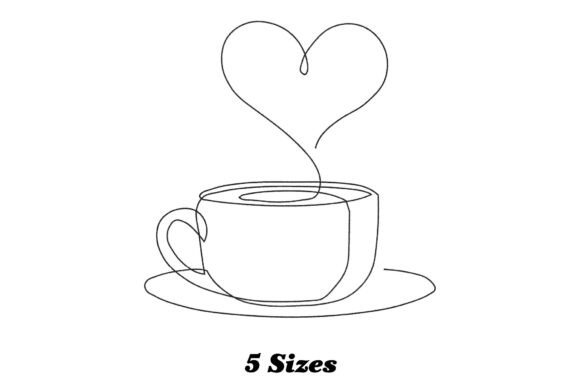
Cup of Coffee One Line: A Craft Fair Review
As an embroidery designer who has spent countless weekends behind a booth table, I have learned that the difference between a browsing customer and a buying customer often comes down to immediate visual impact. When I first loaded the Cup of Coffee One Line design into my software, my initial reaction was one of relief mixed with excitement. In a market saturated with complex, multi-colored motifs, there is a growing demand for minimalism. This design promises to give your fabrics a charming update, and after reviewing its potential for various applications, I believe it delivers on that promise by adding a fun and quirky flair to anything you choose.
First Impressions and Aesthetic Appeal
The "one line" style is not just a trend; it is a statement of modern elegance. When evaluating Cup of Coffee One Line, the immediate impression is that it feels both rustic and contemporary. It avoids the clutter of traditional filled stitches, relying instead on clean, continuous paths to define the shape of a coffee cup. For craft fair sellers, this is crucial. Shoppers walking past a busy booth need to process what they are seeing in seconds. A simple, recognizable silhouette of a coffee cup communicates warmth, comfort, and morning routine instantly.
This aesthetic fits perfectly within the Tea and coffee lover niche, which remains evergreen. Whether your brand leans toward farmhouse chic or modern minimalist, this design adapts seamlessly. It does not scream for attention with loud colors but rather invites curiosity through its simplicity. For handmade shop owners and Etsy sellers, this versatility means the design can appeal to a broad demographic, from college students needing a cute tote to professionals looking for a subtle apron accent.
Product Applications for Maximum Sales
To truly evaluate a machine embroidery design, we must look at where it lives. I mentally placed Cup of Coffee One Line on several standard craft fair products to gauge its effectiveness.
- Tote Bags: This is arguably the strongest application. A large, centered one-line coffee cup on a natural canvas tote creates an instant bestseller. The design scales well, allowing it to be the focal point without overwhelming the fabric.
- Aprons: For kitchenware, placing this design on the bib of an apron adds personality. It suggests that the wearer enjoys their morning brew while cooking, creating an emotional connection with the buyer.
- Tea Towels: Embellishing towels requires care, but the open nature of a one-line design prevents the fabric from puckering excessively. It adds a decorative touch that elevates a basic textile into a giftable item.
- Embroidered Patches: If you offer patches, this design is ideal. It stitches out quickly and looks crisp on felt or twill backing, making it a low-risk, high-reward small shop product.
- Caps and Hats: Here, caution is needed. While the design is simple, the curved surface of a cap can distort linear designs. However, if sized correctly, it can serve as a subtle side emblem.
Beyond physical goods, this design is excellent for digital sellers. Creating a printable mockup for your online listings is easier when the design is clean. You can showcase it on various backgrounds without worrying about complex shadowing or texture interference.
Production Practicality and Batch Efficiency
For those of us running a business, time is money. One of the most appealing aspects of Cup of Coffee One Line is its potential for speed. Unlike dense fill patterns that require thousands of stitches and significant thread consumption, a single-line design typically runs faster. This makes it highly suitable for batch production during the busy holiday season or before a major craft fair.
However, practical selling points must be balanced with technical realities. Because the design relies on a single continuous path, any break in the thread or tension issue will be immediately visible. There is no dense stitching to hide minor imperfections. Therefore, maintaining consistent thread tension is vital. Additionally, since the description mentions embellishing t-shirts and home decor, you must consider the stitch density. While likely low, you must ensure the design is digitized with proper underlay if it is to be used on stretchy fabrics like jersey knits.
Technical Considerations and Careful Use
Before committing to a large run of finished products, there are several technical factors to review. Since the specific file format, exact stitch count, and hoop size are not detailed in the brief description, you must check these details in the actual digital embroidery file before production.
- Fabric Texture: On textured towels, a thin single line might get lost in the weave. Consider using a contrasting thread color or slightly increasing the stitch width if your software allows, to ensure visibility.
- Dark Fabrics: If embroidering on dark navy or black fabrics, ensure you use a bright, high-contrast thread. White, cream, or vibrant orange threads work well to make the coffee cup pop.
- Stabilizer Choice: Even for simple designs, the right stabilizer is non-negotiable. For woven fabrics like canvas totes, a cut-away stabilizer provides long-term durability. For knit t-shirts, a tear-away with a light fusible backing may suffice, but test first to prevent distortion.
- Small Details: If the design includes any tiny text or intricate swirls alongside the cup, verify that they remain legible at smaller sizes. One-line designs can sometimes lose clarity if scaled down too far.
Enhancing Brand Consistency and Visual Value
Incorporating Cup of Coffee One Line into your product line can strengthen your brand identity. If your shop focuses on cozy, home-centered items, this design acts as a visual anchor. It signals to customers that your products are thoughtful and stylish. When displayed in a booth, grouping items featuring this design—such as a matching set of a tote, a towel, and a patch—creates a cohesive look that encourages multiple purchases.
Furthermore, the commercial viability of this design lies in its broad appeal. It is not overly seasonal, meaning it can sell year-round. It appeals to the Etsy seller looking for unique design assets that differentiate their listings from mass-produced goods. By offering a high-quality handmade product featuring this charming motif, you elevate the perceived value of simple textiles.
Final Designer Notes
Before you launch, always test the design on scrap fabric identical to your final product. Check the thread contrast against your chosen material. Confirm the hoop size required to ensure it fits your machine’s capabilities. Most importantly, verify the commercial licensing terms included with the embroidery file. Ensuring you have the right to sell finished products made with this design is critical for legal peace of mind.
In conclusion, Cup of Coffee One Line is a versatile, efficient, and visually appealing addition to any embroidery designer’s library. It bridges the gap between simplicity and charm, making it an excellent choice for craft fair products, handmade gifts, and boutique maker collections. With careful attention to fabric choice and stabilization, it can become a staple in your bestselling inventory.